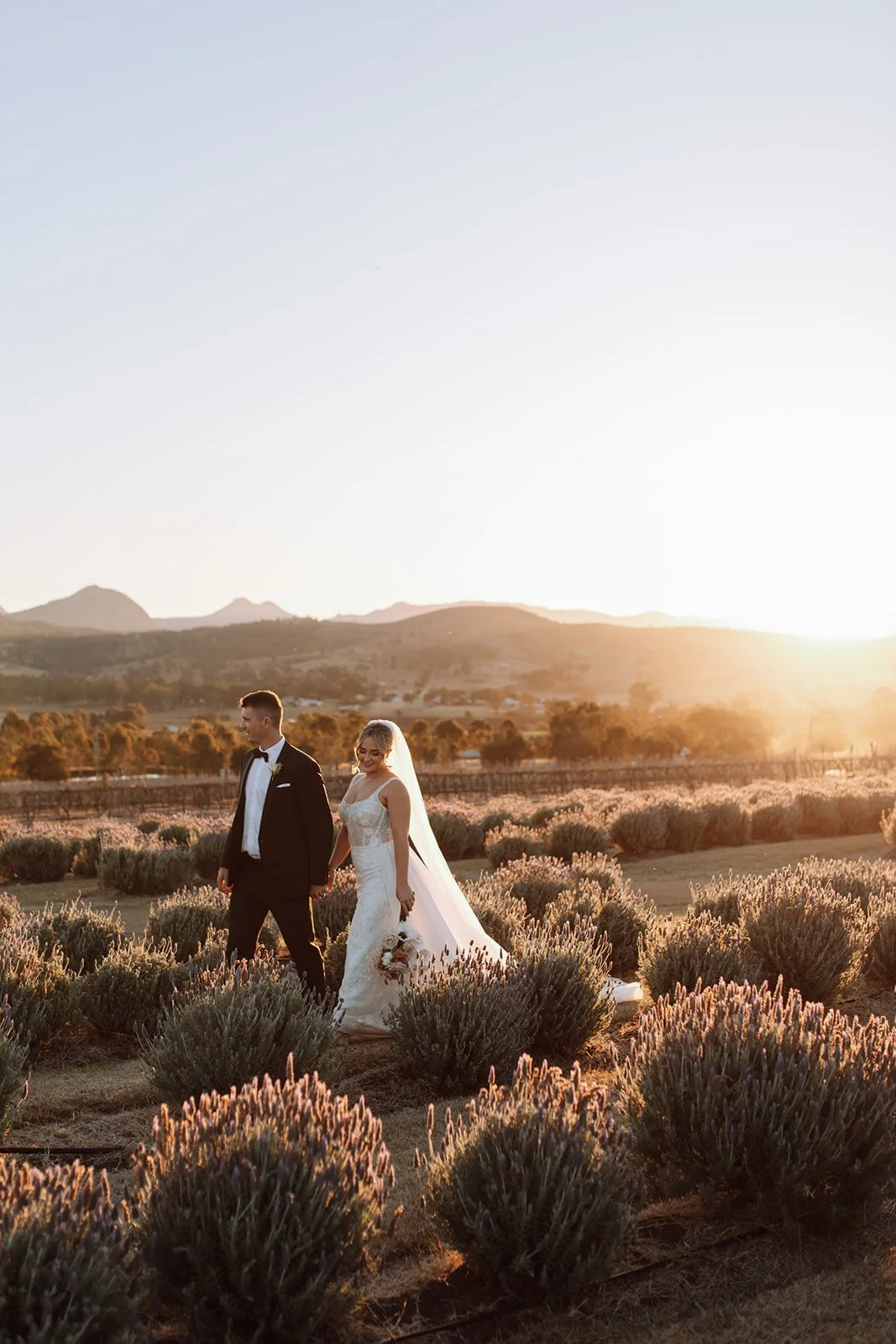
WHY WE'RE OBSESSED WITH GOLDEN HOUR
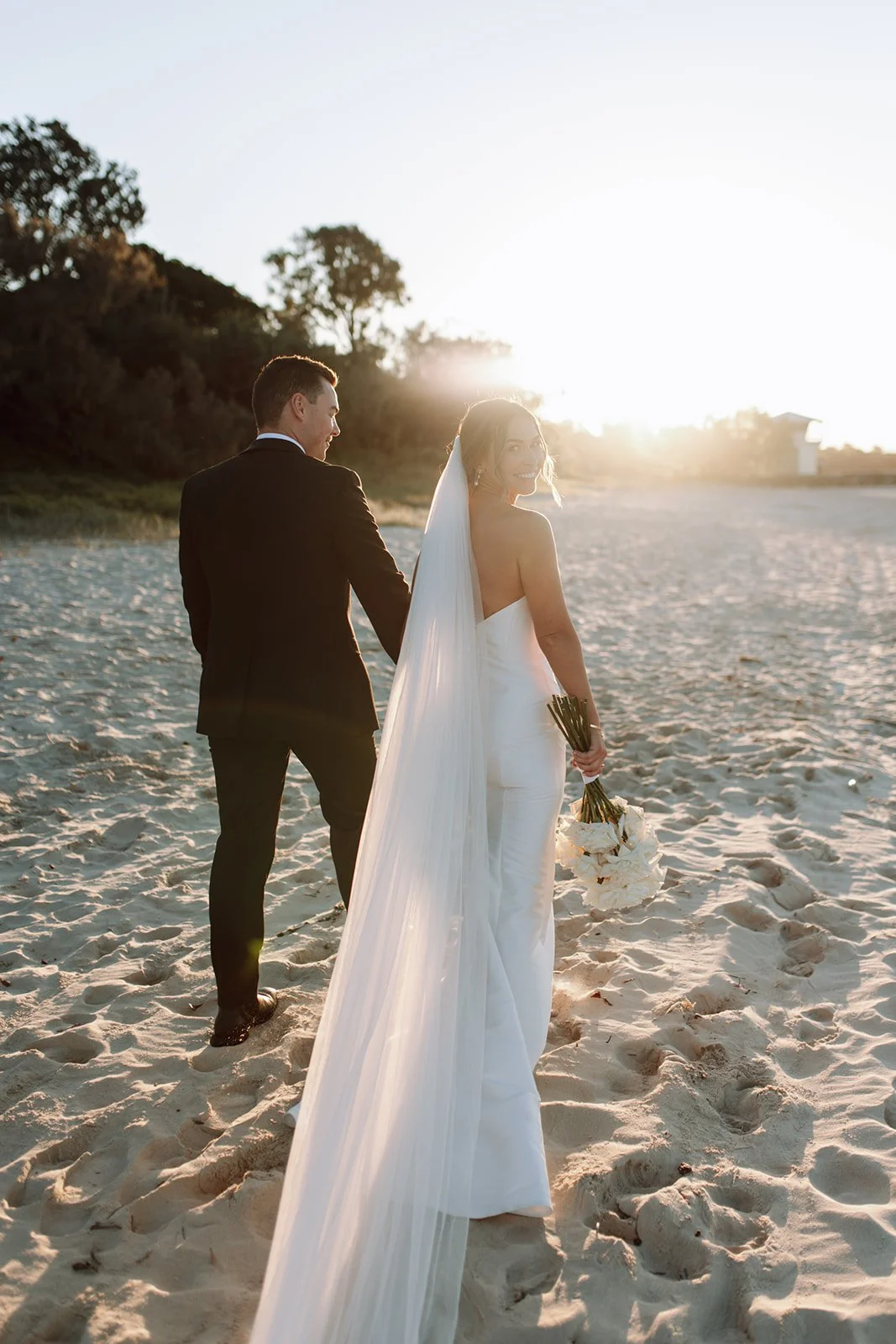
There is a reason we will happily rearrange a wedding timeline for twenty minutes of beautiful light.
Golden hour has a way of making everything feel a little more cinematic. The light softens, the landscape glows and, for a few fleeting minutes, you get to step away from the noise of the wedding and simply be together.
The noise of the reception fades into the background. The sun drops low across the horizon and the light begins to turn warm and golden. For a few fleeting minutes, the world feels quieter.
This is golden hour.
And if there's one part of your wedding timeline we'd encourage you to protect, it's this.
Not simply because the light is beautiful, although it is. Golden hour gives us something much more valuable: a little time for the two of you to step away from the celebration, take a breath and remember that you're married.
WHAT IS GOLDEN HOUR?
Golden hour is the period shortly before sunset when the sun sits low in the sky, creating softer, warmer and more directional light.
Unlike the bright overhead light of the middle of the day, the low sun creates long shadows, gentle highlights and a beautiful warmth across skin, fabric and the surrounding landscape.
It is one of the reasons golden hour wedding photography has become such a coveted part of the wedding day.
But for us, it isn't really about chasing a particular colour of light.
It's about what happens when you give yourselves permission to slow down.
WHY IS GOLDEN HOUR SO BEAUTIFUL FOR WEDDING PHOTOGRAPHY?
Golden hour has a quality that is difficult to recreate artificially.
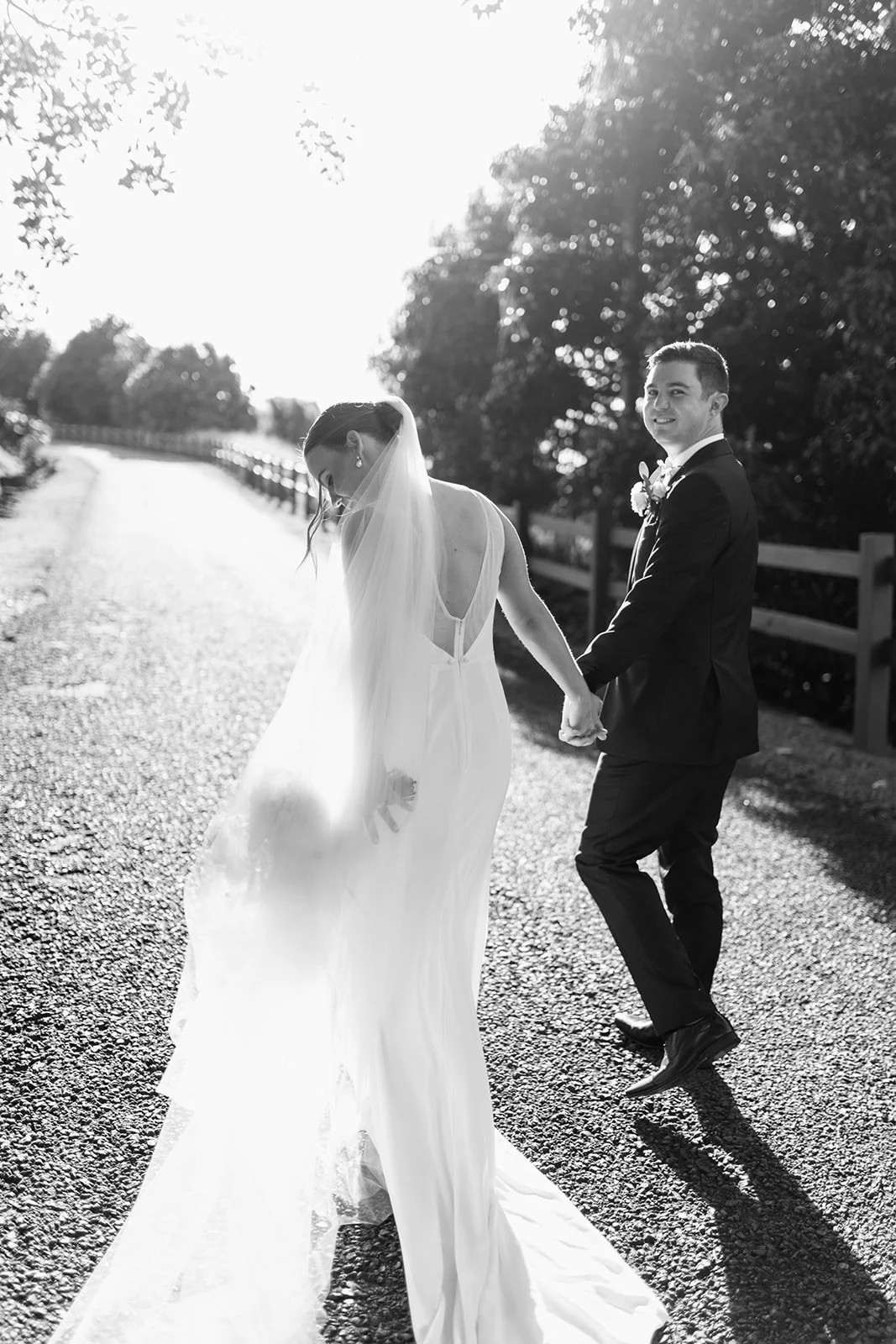
The sun sits low enough to skim across the landscape, illuminate the edges of your veil and dress and create beautiful backlighting around you. The softer light is also more forgiving than harsh midday sun, allowing us to photograph skin, textures and details with greater subtlety.
But what makes these photographs memorable isn't simply the technical quality of the light.
It's the atmosphere.
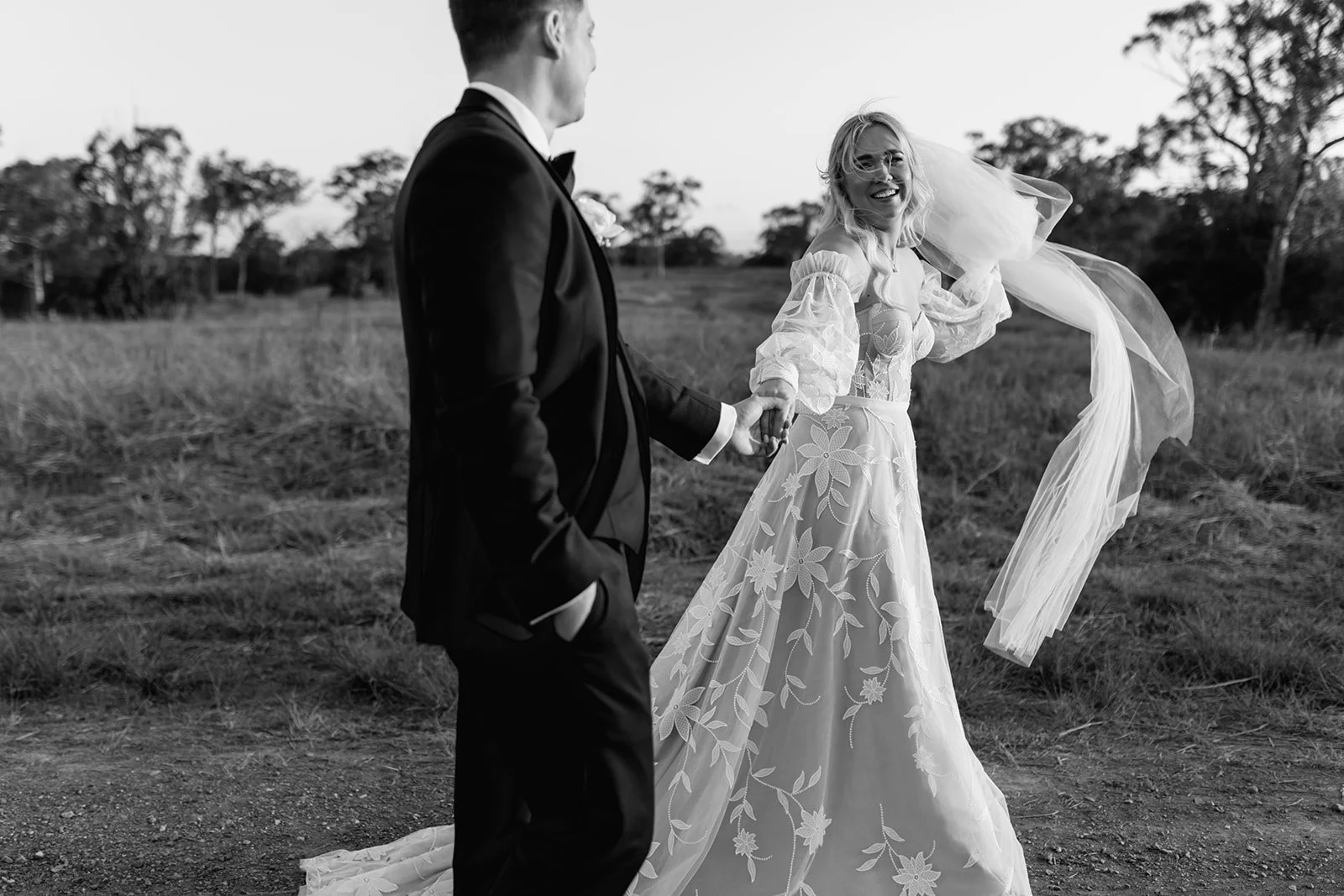
A veil catching the breeze.
Your dress moving through long grass.
Your partner reaching for your hand.
The two of you walking without anyone else around.
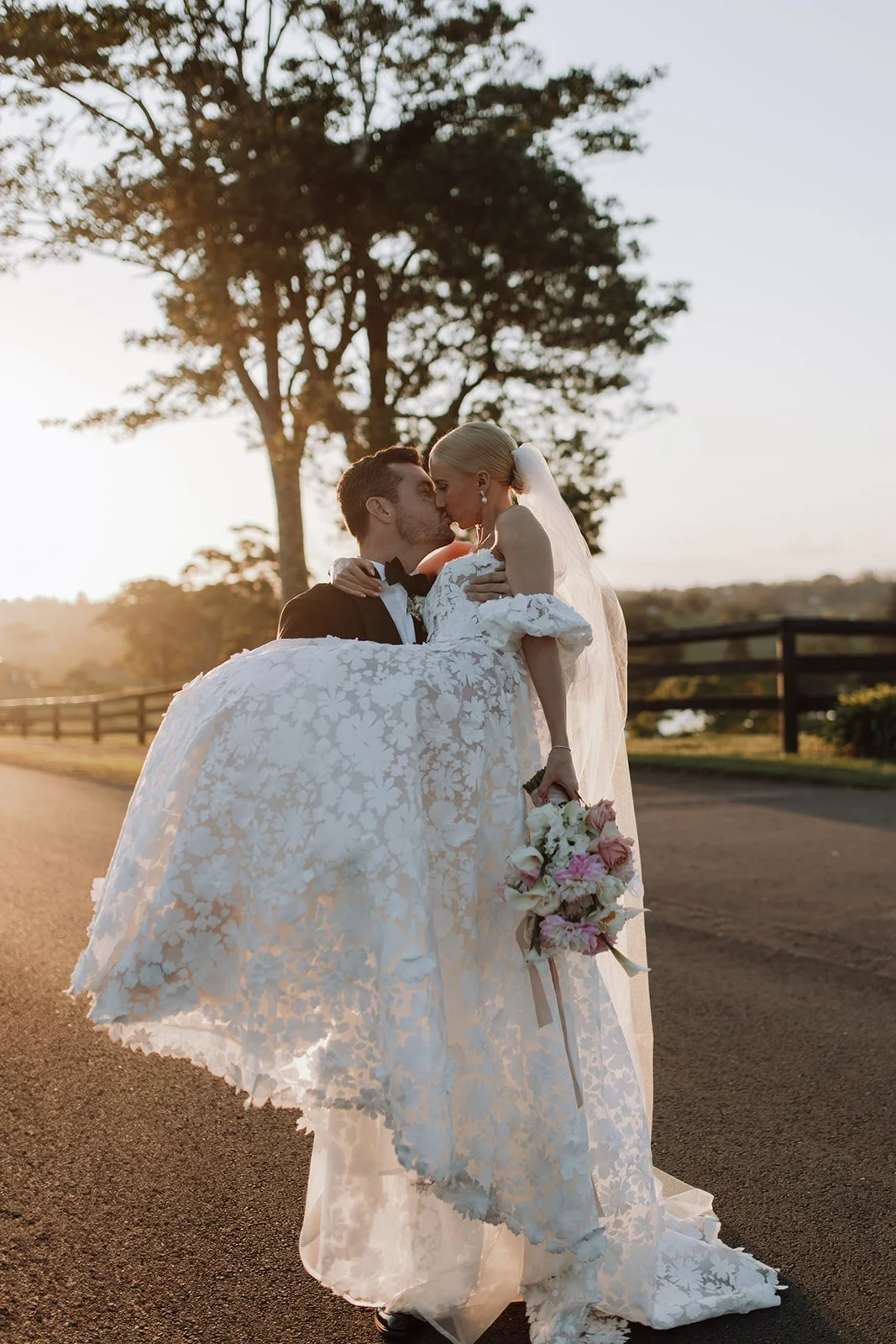
The last rays of sunlight falling across your faces.
These are the photographs that often become the quiet favourites in a wedding gallery.
GOLDEN HOUR IS ABOUT MORE THAN THE PHOTOGRAPHS
This is the part we think is often overlooked.
When we suggest stepping away for golden hour portraits, we're not asking you to leave your wedding simply to take more photographs.
We're creating a pocket of time for you to be together.
Your wedding day can move incredibly quickly. There are people to greet, photographs to take, speeches to hear, champagne to drink and a dance floor waiting for you.
For a few minutes, you can disappear from all of it.
You don't need to perform.
You don't need to pose.
You can simply walk together, talk about the ceremony, take in what has just happened and enjoy being newly married.
And because you're relaxed, the photographs become more natural too.
WHEN DOES GOLDEN HOUR HAPPEN?
Golden hour changes throughout the year and depends on your location.
It isn't always exactly one hour long, either. The most beautiful light can appear before sunset and continue briefly afterwards as the sky begins to soften into dusk.
This is why we don't recommend choosing a fixed photography time without looking at the actual sunset time for your wedding date and location.
In Australia, the difference between a summer and winter wedding can be significant.
A winter wedding may have golden hour arriving while you're still enjoying afternoon drinks, while a summer wedding can push those beautiful portraits much later into the evening.
Your photographer should be looking at this when helping you build your wedding timeline.
HOW LONG DO YOU NEED FOR GOLDEN HOUR WEDDING PHOTOS?
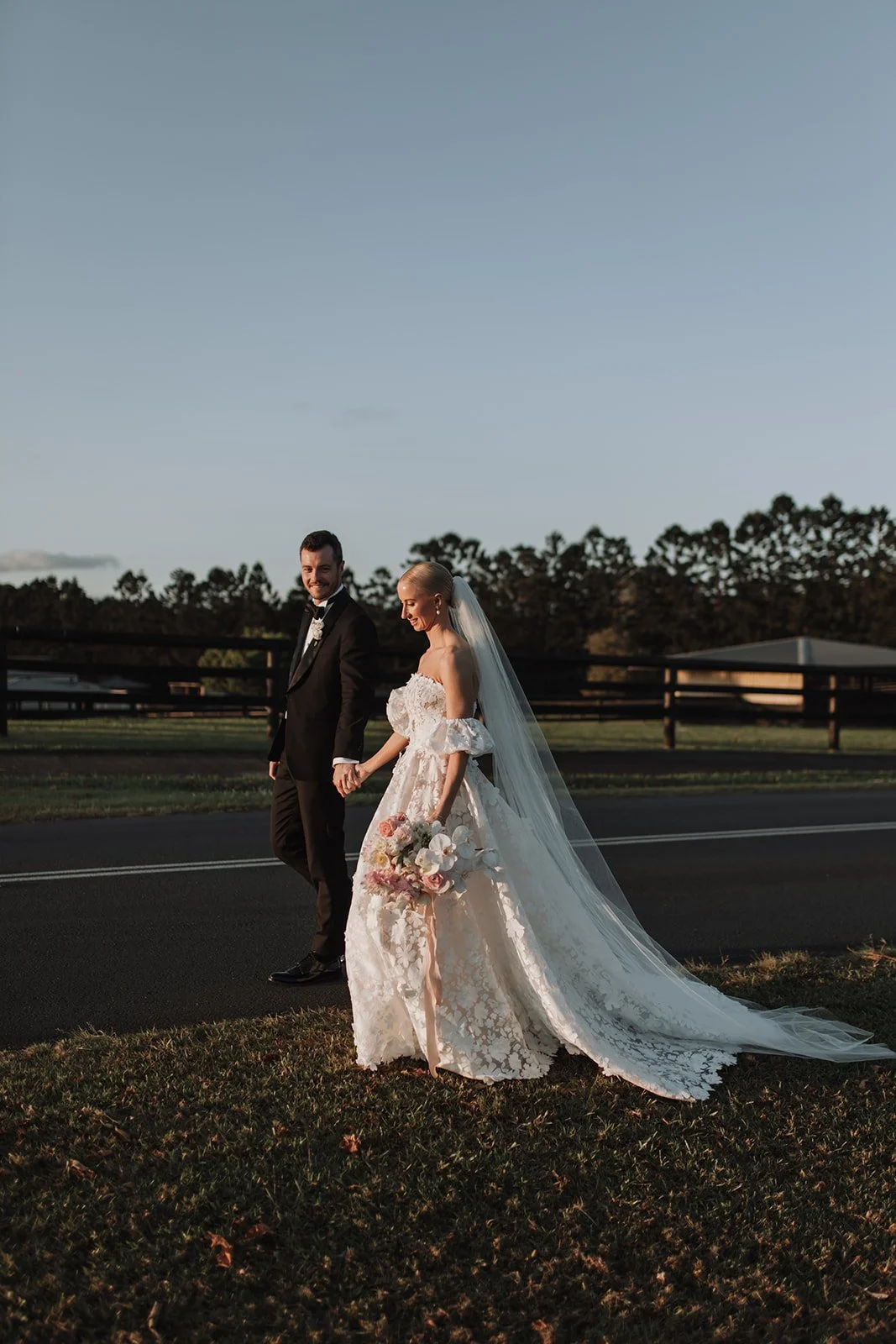
We recommend allowing approximately 30–45 minutes for a dedicated golden hour portrait session where possible.
That doesn't mean 45 minutes of standing in front of the camera.
Far from it.
We'll move, walk, talk, explore the location and let the photographs happen naturally. Sometimes we'll stop for a few considered portraits; other times we'll simply let you interact with one another while we document what unfolds.
If your venue has particularly beautiful sunset light, we may want a little longer.
If you're working with a tight timeline, even 15–20 minutes can make a meaningful difference.
The important thing is to plan for it rather than hope there happens to be time.
HOW DO YOU FIT GOLDEN HOUR INTO A WEDDING TIMELINE?
This is where thoughtful planning makes all the difference.
Rather than treating golden hour as an optional extra at the end of the day, we prefer to build the timeline backwards from the light.
For example:
Ceremony
Allow time for the ceremony and congratulations.
Family photographs
Keep formal photographs organised and intentional so they don't consume your entire afternoon.
Couple portraits
Move into your first portrait session while the light is still available.
Reception
Join your guests for cocktails, dinner and the celebrations.
Golden hour portraits
Step away for 20–45 minutes around sunset.
Return to the party
Come back in time for the moments you don't want to miss.
The exact timeline will depend on your venue, season, ceremony time and reception plans.
But the principle is simple:
Don't try to squeeze golden hour into whatever time happens to be left. Build your day around it.
DO YOU HAVE TO LEAVE YOUR RECEPTION FOR GOLDEN HOUR?
Not necessarily.
And we certainly wouldn't want you to miss something important.
If your speeches are happening during sunset, or your first dance is scheduled for that exact moment, we'll find another opportunity.
Sometimes the best solution is to step outside between courses for ten minutes.
Sometimes we'll photograph you during cocktail hour and return later for a few final portraits.
Sometimes the venue itself provides everything we need without requiring you to go anywhere.
The goal isn't to follow a formula.
It's to create the photographs while keeping you present for your wedding.
WHAT IF IT'S CLOUDY?
Cloudy weather doesn't mean you lose your beautiful light.
In fact, overcast skies can create some of the most beautiful conditions for wedding photography.
Instead of a concentrated beam of sunlight, the clouds act like a giant diffuser, creating soft, even light across the landscape.
And sometimes the most spectacular skies appear just after the sun disappears.
This is why we don't stop photographing when the sun goes down.
We watch the sky.
We look for the last light.
We wait for the moment when the horizon begins to glow.
Golden hour isn't always golden.
Sometimes it's pink.
Sometimes it's hazy.
Sometimes it's dramatic.
Sometimes it's barely there at all.
And that's part of what makes it beautiful.
WHAT IF OUR VENUE DOESN'T HAVE A GOOD SUNSET VIEW?
You don't need an ocean horizon to have beautiful golden hour wedding photographs.
Gardens, vineyards, fields, architecture, courtyards and even city streets can produce extraordinary light.
In fact, some of our favourite images happen when the sun isn't visible at all.
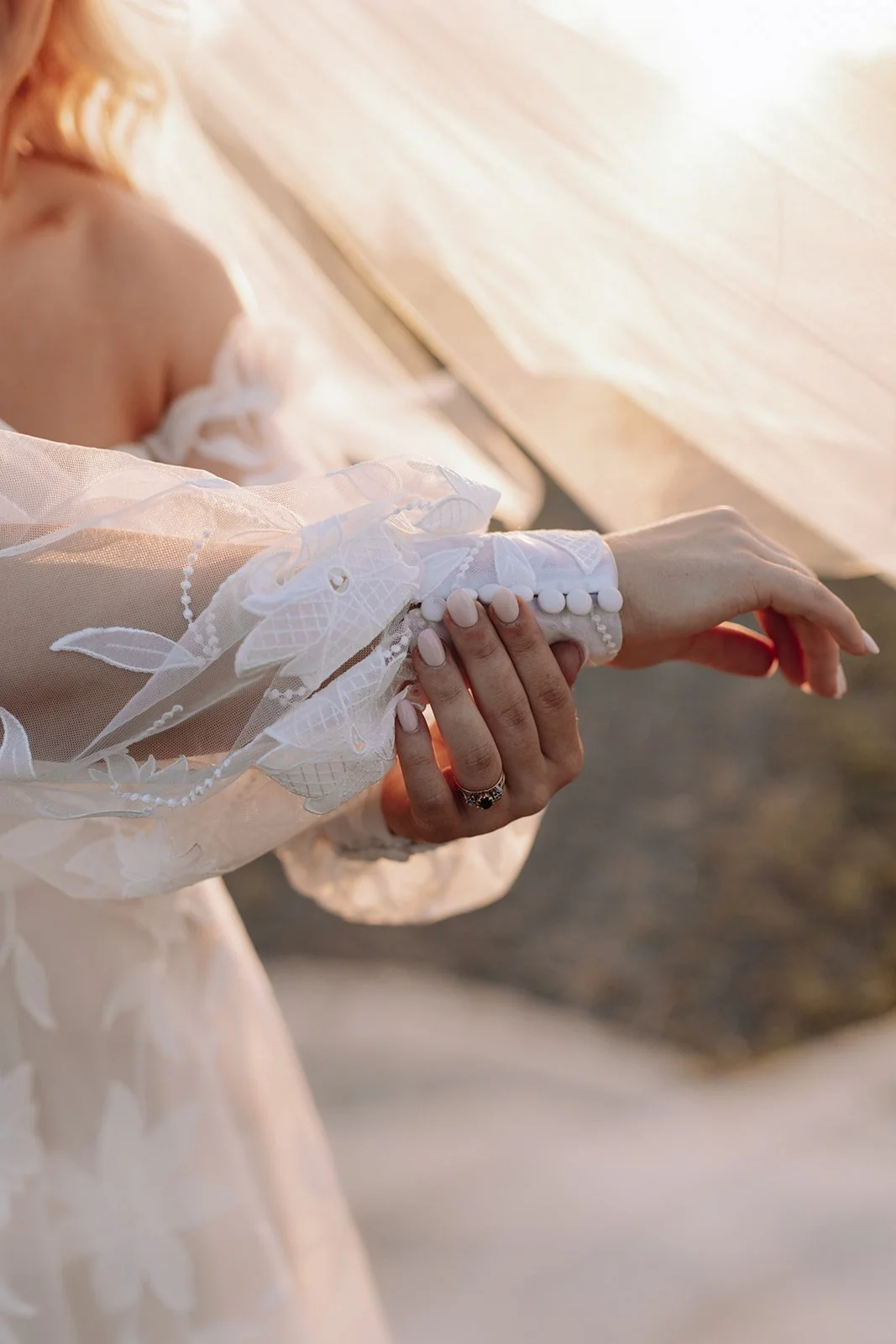
We're looking for the way light interacts with the environment — the way it filters through trees, catches a veil, reflects off a wall or illuminates the edges of your clothing.
A good photographer will look beyond the obvious sunset.
GOLDEN HOUR AND YOUR WEDDING PHOTOGRAPHY STYLE
Golden hour is particularly beautiful for an editorial and documentary approach because it gives us the opportunity to combine intentional portraiture with genuine moments.
We'll create a handful of considered images, but we don't want your entire session to feel like a photoshoot.
We'll encourage you to move.
To walk.
To talk.
To hold each other.
To forget about the camera.
The result is a mixture of editorial portraits and photographs that feel completely unguarded.
The dress catches the light.
Your partner makes you laugh.
You stop walking for a kiss.
The wind picks up.
Your veil moves behind you.
None of these moments can really be planned.
And that's precisely why we leave space for them.
THE GOLDEN HOUR PHOTOGRAPHS YOU'LL RETURN TO
Years from now, you may not remember exactly what time the sun set on your wedding day.
You may not remember how long you spent taking photographs.
But you will remember how it felt to stand beside your new husband or wife as the sun disappeared.
You'll remember looking at each other and realising that the day you'd spent months planning was actually happening.
You'll remember the quiet.
The warmth.
The feeling of being completely present in a day that seemed to pass impossibly quickly.
That's what we're trying to preserve.
Not simply beautiful light.
A feeling.
And that is why we think golden hour is worth making time for.
GOLDEN HOUR WEDDING PHOTOGRAPHY FAQ
What is golden hour in wedding photography?
Golden hour is the period shortly before sunset when the sun is low on the horizon, creating soft, warm and directional light. It is particularly popular for wedding photography because the light can create flattering skin tones, gentle shadows and beautiful backlighting.
What time is golden hour for wedding photos?
Golden hour typically begins around 30–60 minutes before sunset, although the exact timing varies according to the season, location, weather and surrounding landscape. Your photographer should calculate the golden hour for your specific wedding date and venue when creating your timeline.
How long should golden hour wedding photos take?
Around 30–45 minutes is ideal when the timeline allows, although beautiful golden hour portraits can be created in as little as 15–20 minutes. The goal is to allow enough time to move naturally and create a variety of images without making the session feel rushed.
Is golden hour the best time for wedding photos?
Golden hour is one of the most flattering times for outdoor wedding portraits because the sun is lower and the light is softer and warmer. However, beautiful wedding photographs can be created throughout the day. A skilled photographer will work with the available light rather than relying on sunset alone.
Do we have to miss our wedding reception for golden hour photos?
Not necessarily. Golden hour portraits can often be scheduled around cocktails, dinner or other natural breaks in the reception. Your photographer can help you find a short window that gives you beautiful sunset photographs without making you feel like you've missed your own wedding.
What happens if it rains during golden hour?
Rain doesn't necessarily mean missing out on beautiful photographs. Overcast skies create soft, diffused light, while breaks in the clouds can produce spectacular sunsets. Your photographer should have alternative portrait locations and a flexible timeline so you can still make the most of whatever weather your wedding day brings.